
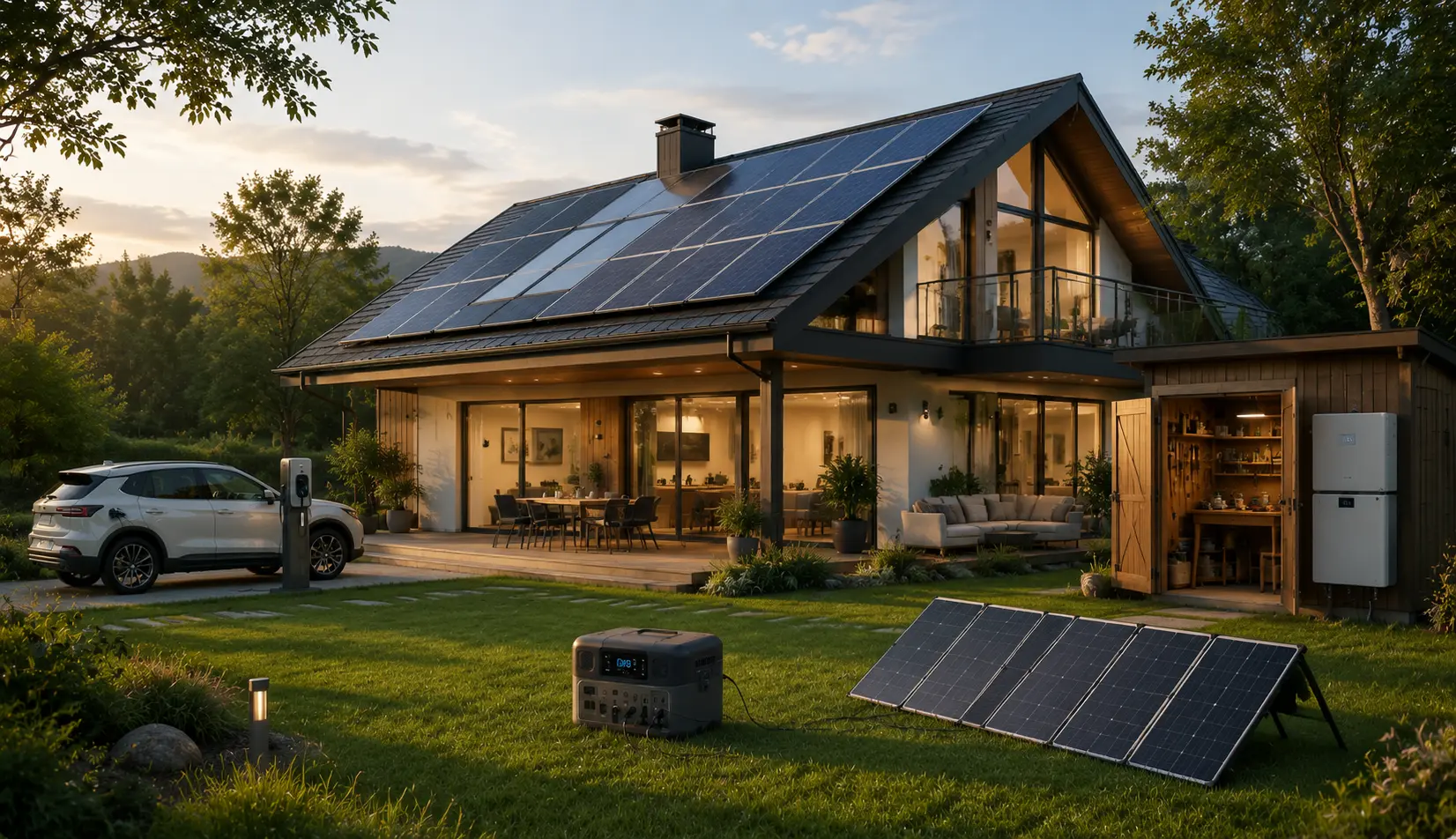
LiFePO4 Battery for ESS: A Practical B2B Buying Guide


Choosing a LiFePO4 battery for ESS projects involves more than comparing capacity and price. For distributors, solar installers, system integrators, and project developers, factors such as cell quality, BMS, inverter compatibility, certifications, and supplier support can directly affect project performance.
LiFePO4 is widely used in energy storage because it offers a practical balance of cycle life, safety, efficiency, and cost. But the right battery depends on the application and system requirements.
This guide covers the main points B2B buyers should check before selecting a LiFePO4 battery for ESS.
What Is a LiFePO4 Battery for ESS?
A LiFePO4 battery for ESS stores electrical energy for use when it is needed. The charging source may be solar PV, the grid, or another power source.
A typical ESS battery system includes:
- LiFePO4 battery cells
- Battery Management System (BMS)
- Energy storage or hybrid inverter
- Communication system
- Electrical protection devices
- Monitoring system
During periods of high solar production, the battery can store excess electricity. The stored energy can then be used during the evening, low solar generation, peak-demand periods, or grid outages.
The required configuration depends on the project. Residential systems may use wall-mounted or stackable batteries, while commercial and industrial projects often require larger modular systems.
Why Use LiFePO4 for Energy Storage?
LiFePO4 has become a common choice for ESS applications because of several practical advantages.
Long Cycle Life
LiFePO4 batteries can provide thousands of charge and discharge cycles under suitable operating conditions.
Some products are rated for 6,000+ cycles, but buyers should always check the conditions behind the rating, including:
- Depth of discharge (DoD)
- Charge and discharge rate
- Temperature
- End-of-life capacity
- Testing method
A higher cycle number is not necessarily a better product if the test conditions are different.
Good Thermal Stability
LiFePO4 chemistry has good thermal and chemical stability compared with some other lithium-ion chemistries.
However, battery chemistry alone does not determine system safety. A properly designed BMS, electrical protection, enclosure, installation environment, and charging strategy are also required.
Low Maintenance
LiFePO4 batteries do not require the routine maintenance associated with lead-acid batteries.
The BMS continuously monitors parameters such as voltage, current, temperature, and cell balance and can disconnect the battery when abnormal conditions occur.
How to Choose a LiFePO4 Battery for ESS
There is no single battery configuration that fits every ESS project. Start with the actual electrical requirements.
1. Calculate Battery Capacity
Battery capacity should be based on energy requirements rather than Ah alone.
The basic relationship is:
Energy (Wh) = Voltage (V) × Capacity (Ah)
For example:
51.2V × 314Ah ≈ 16.08kWh
The usable energy will be lower than the nominal figure depending on the recommended DoD and system losses.
For project planning, consider:
- Daily energy consumption
- Peak load
- Required backup time
- Solar generation
- Expected daily cycles
- Future capacity expansion
2. Check Voltage and Inverter Compatibility
A LiFePO4 battery for ESS must be compatible with the selected inverter.
Common battery configurations include:
- 12V
- 24V
- 48V
- 51.2V
- High-voltage ESS configurations
Voltage alone is not enough. The battery and inverter may also need compatible communication protocols such as CAN or RS485.
Before ordering, confirm compatibility using the exact battery and inverter models.
3. Check Cell Quality
For B2B buyers, cell quality should be part of the supplier evaluation.
Ask for:
- Cell manufacturer
- Cell model
- Rated capacity
- Cell grade
- Production date
- Batch information
- Capacity test data
- Internal resistance data
For larger orders, traceability and batch-level test data can help confirm that the cells supplied match the agreed specification.
4. Evaluate the BMS
The BMS is a critical part of an ESS battery.
Depending on the system design, it should provide protection against:
- Overcharge
- Over-discharge
- Overcurrent
- Short circuit
- Excessive temperature
For integrated systems, also check communication between the BMS and inverter. A battery may have suitable voltage and capacity but still be unsuitable if the communication protocol or control logic is incompatible.
What Certifications Should B2B Buyers Check?
Certification requirements depend on the battery, system configuration, destination market, and application.
Depending on the project, buyers may need to review:
- CE documentation
- UN 38.3 transport testing
- SDS / MSDS
- Applicable IEC standards
- Product test reports
- Warranty documentation
Do not assume that one certificate covers every requirement in every market.
For European projects in particular, confirm the applicable conformity and safety requirements for the finished product before placing a large order.
Choosing the Right ESS Battery Supplier
For B2B buyers, supplier capability matters as much as the battery specification.
Before ordering a LiFePO4 battery for ESS, check whether the supplier can provide:
- Stable cell sourcing
- Consistent production
- Battery test data
- BMS information
- Inverter compatibility support
- Technical documentation
- Certifications
- Warranty terms
- After-sales support
- Production capacity
Price should be considered together with these factors.
A lower purchase price may not result in a lower project cost if poor documentation, inconsistent cells, compatibility problems, or limited technical support create additional work after delivery.
LiFePO4 Battery for Different ESS Applications
Residential Energy Storage
Typical applications include:
- Solar self-consumption
- Backup power
- Off-grid systems
- Peak-time energy use
Wall-mounted and stackable batteries are often suitable where installation space and modular expansion are important.
Commercial Energy Storage
Commercial projects generally require larger capacities and may need multiple battery modules, inverter communication, and future expansion.
Typical applications include commercial buildings, farms, retail facilities, and small industrial sites.
Industrial and Off-Grid ESS
Larger projects may require higher battery capacity, multiple battery clusters, advanced BMS functions, detailed monitoring, and customised system integration.
For these projects, technical support and system compatibility should be evaluated before the battery is selected.
Why Work With Fench Power?
Fench Power supplies LiFePO4 battery cells and energy storage batteries for distributors, solar installers, system integrators, and project developers.
Our product range covers LiFePO4 cells and battery systems in different voltage and capacity configurations for residential, commercial, industrial, and off-grid applications.
For B2B projects, we focus on clear product specifications, battery testing, BMS integration, technical documentation, and project support.
Before placing an order, buyers can confirm the required voltage, capacity, cell specifications, communication requirements, and applicable certifications with our team.
FAQ
How long does a LiFePO4 battery for ESS last?
A LiFePO4 battery can provide thousands of cycles under suitable operating conditions. Actual service life depends on DoD, temperature, charging conditions, discharge rate, cell quality, and BMS protection.
Is LiFePO4 suitable for commercial ESS?
Yes. LiFePO4 is widely used in residential, commercial, and off-grid energy storage. The appropriate battery depends on the project’s load, capacity, inverter, installation environment, and operating profile.
Can ESS batteries be expanded?
Many modular systems can be expanded with compatible battery modules. However, the BMS, inverter capacity, communication system, and installation requirements should be checked before adding modules.
What should I ask an ESS battery supplier?
Ask about the cell manufacturer, cell grade, capacity, production date, BMS, cycle-life test conditions, certifications, warranty, inverter compatibility, testing procedures, and technical support.
Conclusion
A LiFePO4 battery for ESS can be a practical choice for solar storage, backup power, commercial energy storage, and off-grid applications.
For B2B buyers, however, choosing the battery is only part of the process. Cell quality, BMS design, inverter compatibility, certifications, test data, warranty, and supplier support should all be checked before an order is placed.
The right battery is not simply the one with the largest capacity or lowest price. It is the one that matches the project’s electrical requirements, operating conditions, expansion plans, and long-term cost.

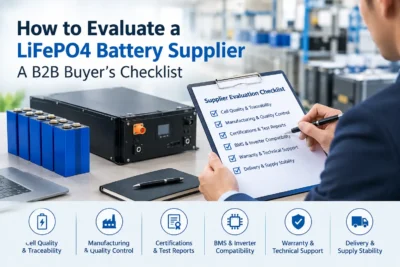
How to Evaluate a LiFePO4 Battery Supplier: A B2B Buyer’s Checklist
How to evaluate a LiFePO4 battery supplier is an important question for distributors, installers, and ESS buyers. Price matters, but
BMS Communication Protocol: Battery-Inverter Compatibility Guide
When buying a battery for an energy storage system (ESS), voltage and capacity are not enough. You also need to
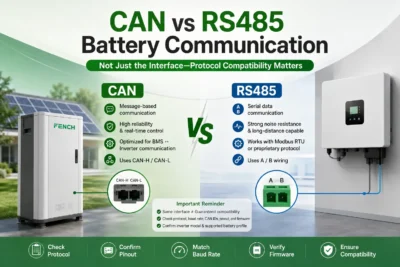
CAN vs RS485 Battery Communication: What’s the Difference?
When connecting a battery to a hybrid inverter, communication is just as important as voltage and capacity. A battery may
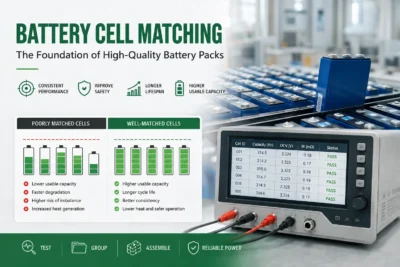
Battery Cell Matching: Why It Matters for Battery Pack Manufacturers
For battery pack manufacturers, battery cell matching is an important step before pack assembly. Cells with the same model and
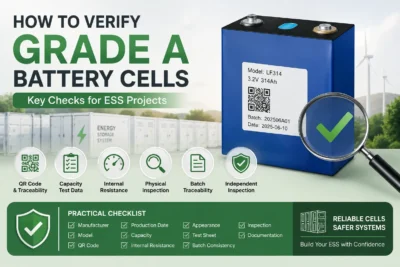
How to Verify Grade A Battery Cells for ESS Projects
When buying battery cells for an energy storage system, the label “Grade A” should not be the only thing you
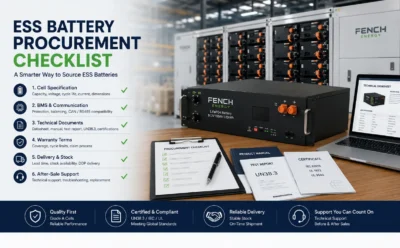
ESS Battery Procurement Checklist for New Distributors and Installers
ESS battery procurement checklistIf you are new to the ESS market, the first battery order matters more than many people