


When buying a LiFePO4 battery, the datasheet is more useful than a product brochure. It shows the battery’s actual specifications, operating limits, test conditions, and compliance information.
For distributors, installers, system integrators, and OEM buyers, knowing how to read a LiFePO4 battery datasheet can help you compare suppliers and avoid unsuitable products before placing an order.
This guide focuses on the specifications that matter most when evaluating a LiFePO4 battery for solar storage, backup power, marine, and other applications.
1. Check Voltage, Capacity, and Energy
Start with the basic specifications:
- Chemistry: LiFePO4 / lithium iron phosphate
- Nominal voltage: such as 12.8V, 25.6V, or 51.2V
- Capacity: usually shown in Ah
- Energy: shown in Wh or kWh
Do not compare batteries by Ah alone.
Use:
Wh = V × Ah
For example:
- 12.8V × 100Ah = 1.28kWh
- 51.2V × 100Ah = 5.12kWh
Also check whether the stated capacity is nominal or usable capacity and under what conditions it was measured.
2. Check Continuous and Peak Discharge Current
Discharge current tells you how much power the battery can deliver.
Look for:
- Continuous discharge current
- Peak discharge current
- Maximum discharge power
- Recommended discharge current
This is particularly important for systems using inverters, pumps, refrigerators, air conditioners, or other equipment with high startup loads.
For example, a 5kWh battery may have enough energy for an application but still be unsuitable if its BMS limits the continuous discharge current below the inverter requirement.
When learning how to read a LiFePO4 battery datasheet, always compare the battery’s current rating with the actual system load.
3. Check the Charging Parameters
The charging section should clearly state:
- Recommended charging voltage
- Maximum charging voltage
- Recommended charging current
- Maximum charging current
- Charging temperature range
These values need to match the solar charger, inverter-charger, or other charging equipment.
Be cautious with claims such as “compatible with all chargers” when the supplier does not provide specific voltage and current limits. A professional LiFePO4 battery datasheet should provide measurable specifications.
4. Look Beyond the Cycle-Life Number
Cycle life is one of the most frequently advertised battery specifications, but the number alone tells you very little.
A battery may be rated for 4,000, 6,000, or 8,000 cycles. Before comparing these figures, check:
- Depth of discharge (DoD)
- Charge and discharge rate
- Test temperature
- End-of-life capacity
- Test method
For example, 6,000 cycles at 60% DoD is not directly comparable with 6,000 cycles at 100% DoD.
A reliable supplier should be able to explain the conditions behind its cycle-life claim. If a datasheet provides only a large cycle number without test conditions, ask for the supporting test data.
5. Review the BMS Specifications
The Battery Management System (BMS) protects the battery and monitors its operating condition.
A good LiFePO4 battery datasheet should identify relevant BMS functions, such as:
- Overcharge protection
- Over-discharge protection
- Overcurrent protection
- Short-circuit protection
- High and low-temperature protection
- Cell balancing
- Communication interface
For energy storage projects, also check whether the BMS can communicate with the intended inverter.
CAN and RS485 are commonly used, but communication compatibility depends on the specific battery and inverter models.
If the BMS specifications are missing, ask the supplier for the protection thresholds and communication details.
6. Check the Temperature Range
Temperature affects both battery performance and service life.
Check the separate limits for:
- Charging
- Discharging
- Storage
Low-temperature charging deserves particular attention. LiFePO4 batteries generally require suitable protection when charging below freezing.
For projects in Northern Europe or other cold climates, confirm whether the battery has:
- Low-temperature charging protection
- Heating
- A suitable charging temperature range
For outdoor installations, also check the maximum operating temperature and enclosure requirements.
7. Check Certifications and Test Documents
For international B2B procurement, compliance documentation can be just as important as electrical specifications.
Depending on the battery and target market, relevant documents may include:
- UN 38.3
- IEC 62619
- UL 1973
- CE documentation
- RoHS documentation
- SDS / MSDS
- Safety and performance test reports
Do not rely only on certification logos shown on a product page. Ask the supplier for the actual documents and confirm that they apply to the battery model you are purchasing.
Requirements vary by product, application, and destination market, so confirm the applicable requirements before a bulk order.
8. Watch for Missing Information
A professional LiFePO4 battery datasheet should provide enough information to evaluate the product.
Pay attention if it does not clearly state:
- Capacity test conditions
- Continuous discharge current
- Maximum charging current
- Operating temperature
- BMS specifications
- Cycle-life test conditions
- Cell information
- Applicable certifications
Marketing terms such as “premium quality,” “ultra-long life,” or “high performance” are not substitutes for technical data.
If important specifications are missing, request clarification before comparing prices.
9. Use a Buyer Checklist
Before placing an order, confirm:
- Is the chemistry clearly stated as LiFePO4?
- Are voltage and capacity suitable for the application?
- Is usable energy clearly defined?
- Is the discharge current sufficient?
- Are charging parameters compatible with the equipment?
- Are cycle-life test conditions available?
- Is the BMS properly specified?
- Are temperature limits suitable for the installation?
- Are relevant certifications and test reports available?
- Can the supplier provide technical support?
If any important specification is unclear, ask for the complete technical documentation before purchasing.
What Should You Ask the Supplier?
If the LiFePO4 battery datasheet does not answer an important technical question, ask the supplier directly.
Useful requests include:
“Please provide the cycle-life test conditions, including DoD, charge/discharge rate, temperature, and end-of-life capacity.”
You can also request:
- Full battery datasheet
- Cell specification
- BMS specification
- Test reports
- Certification documents
- Inverter compatibility information
- Warranty terms
This gives you a more reliable basis for comparing suppliers.
Final Thoughts
Knowing how to read a LiFePO4 battery datasheet helps B2B buyers compare products based on technical evidence rather than marketing claims.
Focus on the complete specification: voltage, capacity, current, charging limits, cycle-life conditions, BMS, temperature range, and compliance documents.
For distributors, installers, system integrators, and OEM buyers, a clear and complete datasheet is an important first step in choosing the right battery for a project.

EU Battery Passport 2027: What Home ESS Battery Suppliers Need to Prepare
The EU Battery Passport 2027 requirement starts on 18 February 2027. For home energy storage suppliers, two questions come first:

Net Metering in the Netherlands Ends in 2027: A Battery Guide for Installers
Net metering in the Netherlands ends on 1 January 2027. For solar installers and residential battery distributors, this gives homeowners
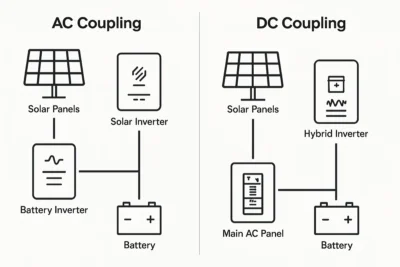
Adding a LiFePO4 Battery to an Existing Solar System: An Installer’s Checklist
Adding a LiFePO4 battery to an existing solar system can increase solar self-consumption, reduce evening grid imports and provide backup
How to Evaluate a LiFePO4 Battery Supplier: A B2B Buyer’s Checklist
How to evaluate a LiFePO4 battery supplier is an important question for distributors, installers, and ESS buyers. Price matters, but
BMS Communication Protocol: Battery-Inverter Compatibility Guide
When buying a battery for an energy storage system (ESS), voltage and capacity are not enough. You also need to
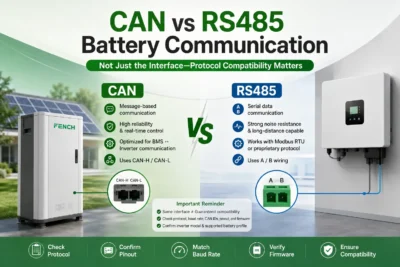
CAN vs RS485 Battery Communication: What’s the Difference?
When connecting a battery to a hybrid inverter, communication is just as important as voltage and capacity. A battery may