
LiFePO4 Battery Cell vs Finished Battery Pack: Key Factors for B2B Buyers

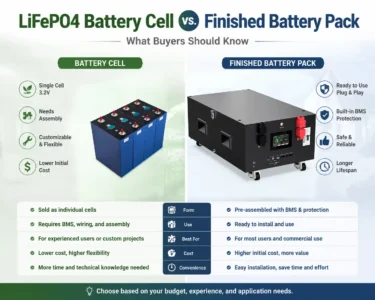
LiFePO4 battery cell vs battery pack is an important sourcing decision for OEMs, energy storage integrators, distributors, and industrial equipment manufacturers. Buying individual LiFePO4 battery cells gives you more control over battery design, while a finished LiFePO4 battery pack reduces assembly and integration work.
The better option depends on your technical capability, customization requirements, project volume, and total cost—not simply the quoted battery price.
LiFePO4 Battery Cell vs Battery Pack: What Is the Difference?
The main difference is the level of integration.
A LiFePO4 battery cell is the basic energy storage component. A battery pack uses multiple LiFePO4 battery cells connected in a specific series and parallel configuration. A finished LiFePO4 battery pack may also include a BMS, busbars, wiring, terminals, sensors, and an enclosure.
For B2B buyers, this creates two different sourcing models:
- Buy LiFePO4 battery cells and assemble the battery in-house.
- Buy a finished LiFePO4 battery pack that is ready for installation or system integration.
| Factor | LiFePO4 Battery Cells | Finished LiFePO4 Battery Pack |
|---|---|---|
| Customization | High | Medium to high |
| BMS | Selected separately | Usually integrated |
| Assembly | Buyer responsibility | Supplier completed |
| Engineering work | Higher | Lower |
| Deployment | Slower | Faster |
| Best for | OEMs and assemblers | Distributors and installers |
When Should You Buy LiFePO4 Battery Cells?
Buying LiFePO4 battery cells makes sense when your company has battery assembly or engineering capabilities.
This model is suitable for:
- Battery manufacturers
- OEM projects
- Energy storage integrators
- Industrial equipment manufacturers
- Custom battery developers
With individual LiFePO4 battery cells, you can determine the series and parallel configuration, BMS, enclosure, connectors, and communication system. This provides greater control over the final battery design.
However, cell sourcing also creates additional responsibilities. Your team needs to manage cell matching, pack assembly, BMS configuration, electrical connections, testing, and quality control.
For bulk LiFePO4 battery cell purchasing, ask the supplier for detailed specifications such as rated capacity, internal resistance, charge and discharge limits, cycle-life test conditions, and operating temperature.
When Should You Buy a Finished LiFePO4 Battery Pack?
A finished LiFePO4 battery pack is often a better option when your priority is faster deployment and lower integration work.
Finished battery packs are commonly suitable for:
- Solar installers
- Battery distributors
- Energy storage resellers
- Off-grid system providers
- Equipment manufacturers without battery assembly facilities
- Project buyers
A finished LiFePO4 battery pack normally integrates the battery cells, BMS, wiring, terminals, and enclosure. This allows the buyer to focus on system installation instead of battery assembly.
For B2B buyers without in-house battery engineering, a finished pack can also reduce integration risk.
Which Option Has the Lower Total Cost?
In a LiFePO4 battery cell vs battery pack comparison, the lowest cell price does not necessarily mean the lowest project cost.
When buying LiFePO4 battery cells, also consider:
- BMS cost
- Busbars and wiring
- Battery enclosure
- Assembly labor
- Cell matching
- Testing
- Engineering
- Certification
- Quality inspection
A finished LiFePO4 battery pack includes most of these integration costs in the product price.
For a company with an established battery assembly line, LiFePO4 battery cells may provide better cost control at larger volumes. For distributors, installers, and project buyers, a finished LiFePO4 battery pack may be more economical after labor and engineering costs are included.
What Should B2B Buyers Check?
Whether you buy LiFePO4 battery cells or a finished battery pack, supplier verification should be part of the purchasing process.
Before placing a bulk order, request:
- Complete technical datasheet
- Capacity and cycle-life test conditions
- BMS specifications
- Operating temperature range
- Quality-control information
- Warranty terms
- UN38.3 and applicable transport documents
- Relevant certifications
- Product traceability information
For LiFePO4 battery cells for energy storage, pay particular attention to capacity consistency, internal resistance, voltage consistency, and batch traceability.
For finished LiFePO4 battery packs, check BMS protection functions, continuous discharge current, communication protocols, enclosure design, and compatibility with your inverter or equipment.
The required certifications depend on the application and destination market. Buyers should confirm applicable requirements before placing a bulk order.
LiFePO4 Battery Cells or Battery Pack: Which Is Right?
Choose LiFePO4 battery cells when you need:
- Custom battery architecture
- In-house pack assembly
- OEM integration
- Greater BMS and enclosure control
- Flexible battery configurations
Choose a finished LiFePO4 battery pack when you need:
- Faster deployment
- Less engineering work
- Easier installation
- A ready-to-use battery solution
- Lower integration responsibility
The right choice in a LiFePO4 battery cell vs battery pack comparison depends on your technical resources, order volume, customization requirements, and total project cost.
Final Takeaway
For B2B sourcing, LiFePO4 battery cell vs battery pack should be evaluated as a total solution rather than a simple price comparison.
LiFePO4 battery cells are better suited to manufacturers, OEMs, and system integrators that can handle battery assembly and testing. Finished LiFePO4 battery packs are often more practical for distributors, installers, and project buyers that need a ready-to-integrate solution.
Before choosing a LiFePO4 battery supplier, compare the datasheet, testing conditions, BMS specifications, quality documents, warranty, and total project cost. A clear technical evaluation before ordering can reduce integration and sourcing risks later.
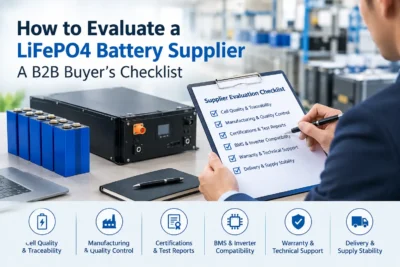
How to Evaluate a LiFePO4 Battery Supplier: A B2B Buyer’s Checklist
How to evaluate a LiFePO4 battery supplier is an important question for distributors, installers, and ESS buyers. Price matters, but
BMS Communication Protocol: Battery-Inverter Compatibility Guide
When buying a battery for an energy storage system (ESS), voltage and capacity are not enough. You also need to
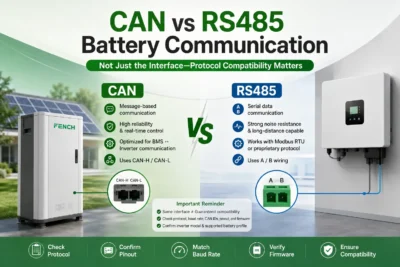
CAN vs RS485 Battery Communication: What’s the Difference?
When connecting a battery to a hybrid inverter, communication is just as important as voltage and capacity. A battery may
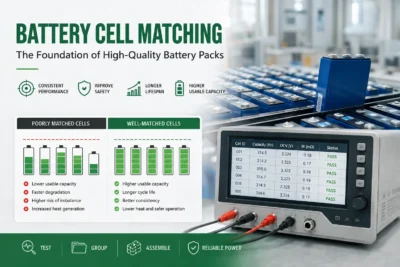
Battery Cell Matching: Why It Matters for Battery Pack Manufacturers
For battery pack manufacturers, battery cell matching is an important step before pack assembly. Cells with the same model and
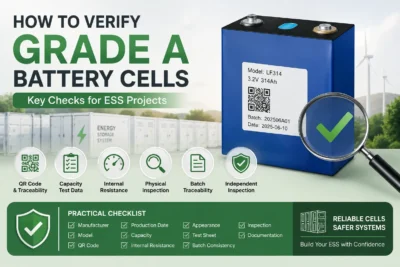
How to Verify Grade A Battery Cells for ESS Projects
When buying battery cells for an energy storage system, the label “Grade A” should not be the only thing you
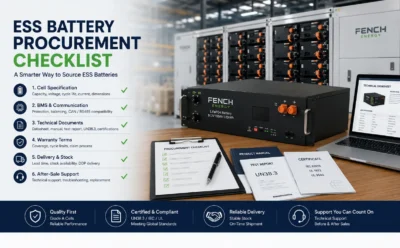
ESS Battery Procurement Checklist for New Distributors and Installers
ESS battery procurement checklistIf you are new to the ESS market, the first battery order matters more than many people