280Ah vs 314Ah LiFePO4 Cells: A B2B Buyer’s Guide for Home Energy Storage
For battery distributors, solar installers, energy storage system integrators, and OEM/ODM buyers, choosing the right LiFePO4 battery cells is an important step when sourcing batteries for residential energy storage projects.
Among commonly used prismatic cells, 280Ah and 314Ah LiFePO4 cells are both suitable for home energy storage battery systems. While 314Ah cells offer higher capacity per cell, the right choice for a business depends on more than capacity. Battery design, BMS compatibility, cell consistency, procurement cost, and supply reliability should also be considered.
280Ah vs 314Ah LiFePO4 Cells: Key Differences
Both cell types typically use a nominal voltage of 3.2V. The main difference is their capacity and the amount of energy they can provide within the same battery configuration.
| Specification |
280Ah LiFePO4 Cell |
314Ah LiFePO4 Cell |
| Nominal Voltage |
3.2V |
3.2V |
| Capacity |
280Ah |
314Ah |
| Nominal Energy |
~896Wh |
~1,005Wh |
| Cell Type |
Prismatic |
Prismatic |
| Typical Application |
Home & residential ESS |
Home & residential ESS |
| 16S Nominal Energy |
~14.34kWh |
~16.08kWh |
For a 16S configuration commonly used in 51.2V home energy storage batteries, 314Ah cells provide approximately 1.74kWh more nominal energy than 280Ah cells.
However, nominal energy does not equal usable battery capacity. Actual performance depends on factors such as depth of discharge, operating voltage, temperature, BMS settings, and system efficiency. Buyers should always verify the supplier’s technical datasheet before placing an order.
280Ah LiFePO4 Cells for Existing Home Battery Designs
280Ah LiFePO4 cells remain a practical choice for many residential battery platforms, particularly when a battery manufacturer or system integrator already has an established design.
If your existing BMS, busbars, enclosure, or battery management strategy has been developed around 280Ah cells, changing to a different cell format may require additional engineering, testing, and validation.
For B2B buyers, 280Ah cells may be suitable when:
- Your existing home energy storage battery uses 280Ah cells.
- Your BMS and mechanical structure are already compatible.
- You want to minimize redesign and validation costs.
- Your target battery capacity can be achieved with the existing configuration.
- You already have an established supply chain for 280Ah cells.
For distributors and OEM/ODM customers, maintaining a proven battery configuration can be an important consideration when supplying residential energy storage systems to different markets.
314Ah LiFePO4 Cells for New Residential Energy Storage Designs
314Ah LiFePO4 cells provide approximately 12% more nominal capacity than 280Ah cells. This makes them an attractive option for new home energy storage battery designs that require higher capacity within a similar cell configuration.
Higher capacity per cell can help battery manufacturers and system integrators optimize their battery architecture and provide more energy storage capacity for homeowners.
314Ah cells may be suitable when:
- You are developing a new residential battery platform.
- Higher capacity per cell is beneficial to your design.
- You want to optimize the battery configuration.
- Your BMS and enclosure are compatible with the selected cell.
- Your target market requires higher-capacity home energy storage batteries.
However, higher capacity does not automatically mean a lower overall battery cost. Cell dimensions, supplier pricing, BMS compatibility, logistics, and system design should all be evaluated before procurement.
What Should B2B Buyers Consider When Sourcing LiFePO4 Cells?
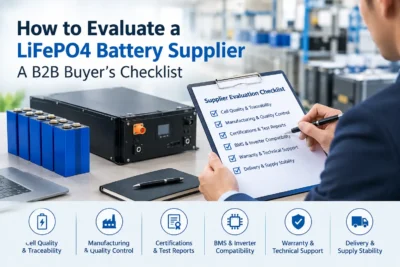
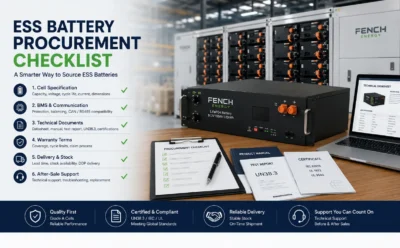
When purchasing LiFePO4 cells in bulk, professional buyers should evaluate the complete supply solution rather than focusing only on the Ah rating.
1. Cell Quality and Consistency
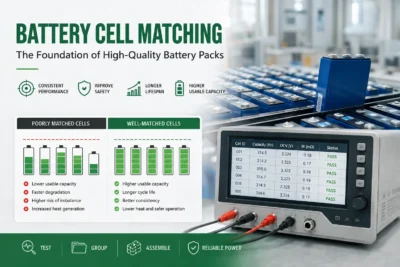
Review important specifications such as capacity tolerance, internal resistance, voltage consistency, and cycle performance.
Consistent cells are particularly important for residential battery packs because multiple cells must work together under the same BMS and operating conditions.
2. Cell Manufacturer and Traceability
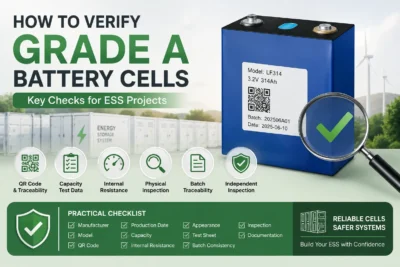
Before placing a bulk order, confirm the cell manufacturer, model, production date, batch information, and available quality documentation.
Good traceability helps distributors, installers, and battery manufacturers maintain consistent product quality across different production batches.
3. Compatibility With the Complete Battery System
The selected LiFePO4 battery cells should be compatible with the entire residential energy storage system, including:
- BMS
- Inverter
- Busbars
- Battery enclosure
- Thermal management
- Charging and discharge requirements
A cell should therefore be evaluated as part of the complete battery design, not as an isolated component.
4. Total Cost per kWh
For B2B procurement, comparing only the price per cell can be misleading.
Consider the complete cost, including cell price, logistics, battery integration, engineering changes, warranty requirements, and expected operating performance.
For residential energy storage projects, the goal should be to achieve a reliable and commercially competitive battery solution rather than simply selecting the lowest-priced cell.
280Ah vs 314Ah: Which Cell Should You Choose?
There is no universal winner between 280Ah and 314Ah LiFePO4 cells.
280Ah cells can be a practical choice for established home battery designs where compatibility and proven configurations are priorities. 314Ah cells can be attractive for new residential energy storage systems that benefit from higher capacity per cell.
For battery distributors, solar installers, system integrators, and OEM/ODM buyers, the best choice should be based on the complete project requirements, including battery architecture, target capacity, BMS compatibility, cell quality, supply stability, and total cost.
FAQ
Are 314Ah LiFePO4 cells better than 280Ah cells?
Not for every application. 314Ah cells provide higher capacity, while 280Ah cells may be more suitable for existing battery platforms and established designs.
Can 280Ah and 314Ah cells be used in the same battery pack?
They should not be mixed without proper engineering evaluation. Differences in capacity, internal resistance, dimensions, and electrical characteristics can affect battery performance and cell balancing.
What should I check before buying LiFePO4 cells in bulk?
Check the manufacturer’s datasheet, capacity, internal resistance, consistency, production batch, traceability, quality documentation, and compatibility with your BMS and residential battery design.
Source LiFePO4 Cells for Residential Energy Storage
Fench Power provides LiFePO4 battery cells and residential energy storage solutions for distributors, solar installers, system integrators, and OEM/ODM partners.
Whether you are sourcing 280Ah or 314Ah cells for an existing home battery platform or developing a new residential energy storage solution, our team can help evaluate cell specifications and supply requirements.
Contact Fench Power to discuss your LiFePO4 cell sourcing and bulk procurement needs.