
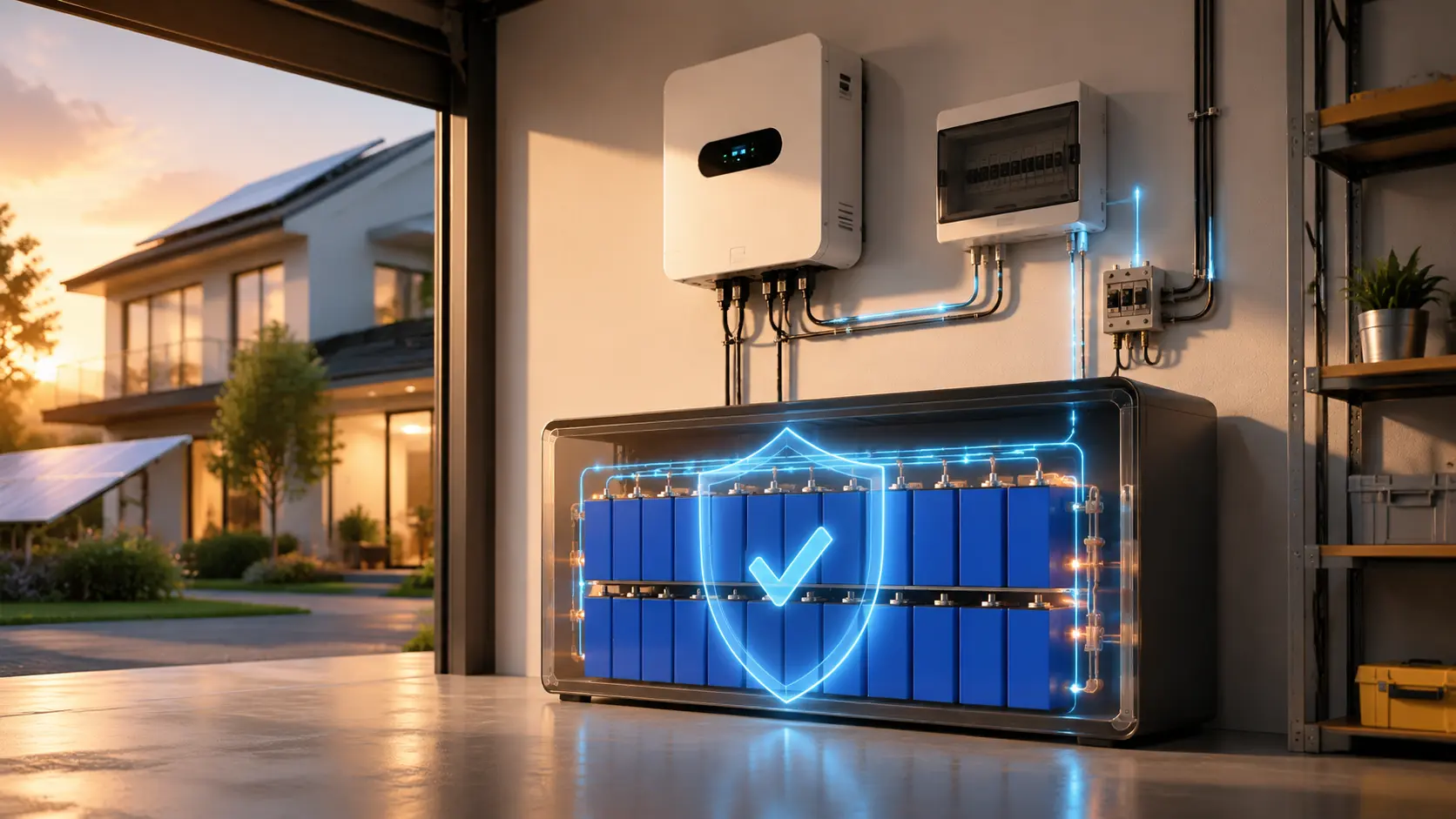
How to Read a LiFePO4 Battery Datasheet Before Buying


When buying a LiFePO4 battery, the datasheet is more important than the brochure.
A good datasheet tells you what the battery can really do, how it was tested, and whether it is suitable for your project. A bad one often hides behind vague marketing language, missing test conditions, or oversized performance claims.
For European buyers in particular, this matters even more. Whether you are sourcing for solar storage, backup power, marine use, or OEM battery packs, you need clear technical data, safety information, and compliance documents before placing an order.
This guide shows you how to read a LiFePO4 battery datasheet step by step, so you can compare suppliers with more confidence and reduce buying risk.
1. Start with the basic product information
The first section of any datasheet should confirm the most important basics:
- Chemistry: LiFePO4, also called lithium iron phosphate
- Nominal voltage: for example 12.8V, 25.6V, or 51.2V
- Capacity: usually shown in amp-hours, such as 100Ah or 200Ah
- Energy: often expressed in watt-hours, for example 1280Wh or 5120Wh
These values tell you whether the battery fits your system design.
Why this matters
Many buyers look only at amp-hours, but that is not enough. A 12.8V 100Ah battery and a 25.6V 100Ah battery do not provide the same total energy. To compare batteries properly, always check watt-hours as well.
A simple reminder:
Wh = V × Ah
For example:
- 12.8V × 100Ah = 1280Wh
- 51.2V × 100Ah = 5120Wh
If a datasheet does not clearly state voltage, capacity, and energy, that is already a warning sign.
2. Check the discharge specifications
The next section to review is the discharge performance. This is especially important if the battery will be used in solar storage, telecom backup, UPS systems, or industrial equipment.
Look for these values:
- Continuous discharge current
- Peak discharge current
- Maximum discharge power
- Recommended operating current
What these numbers tell you
The continuous discharge current shows how much current the battery can deliver safely over time. The peak discharge current tells you how much it can handle for a short period, such as when starting a motor or supporting a surge load.
If your application includes an inverter, pump, fridge, air conditioner, or other high-startup-load device, this section is essential.
Example
A battery may look large enough on paper, but if its continuous discharge rating is too low, it may not support your actual load. In that case, the battery is not the problem — the sizing is.
For European B2B buyers, this is one of the easiest ways to filter out weak products. A serious supplier should provide clear discharge limits, not just “high performance” claims.
3. Understand the charging parameters
Charging information is just as important as discharge performance.
A proper datasheet should include:
- Recommended charging voltage
- Maximum charging voltage
- Charging current
- Charging method
- Whether low-temperature charging protection is included
Why this matters
A LiFePO4 battery must be charged with the correct profile. If the charging settings are wrong, battery life can be shortened and safety can be affected.
If you are using the battery with:
- solar charge controllers
- inverter-chargers
- grid chargers
- OEM systems
then the charging parameters must match the system design.
What to watch for
If the datasheet only says “compatible with all chargers” without giving exact voltage and current ranges, be careful. Good battery documentation should be specific.
4. Look closely at the cycle life claims
Cycle life is one of the most common selling points in LiFePO4 battery marketing. But this is also where many buyers get misled.
A datasheet may say:
- 2,000 cycles
- 4,000 cycles
- 6,000 cycles
- even 8,000 cycles
But the number alone is not enough.
Always check the test conditions
You should look for:
- Depth of discharge (DoD)
- Charge and discharge rate
- Test temperature
- End-of-life definition
- Cycle count standard
For example, a battery rated for 6,000 cycles at 60% DoD under controlled conditions is not the same as a battery tested at 100% DoD in a harsh environment.
Practical advice
A good supplier will explain:
- how the cycle life was measured
- under what conditions the test was performed
- what capacity level is considered “end of life”
If the datasheet only gives a big cycle number and nothing else, do not treat that number as a guarantee.
Battery University and many technical references note that cycle life depends heavily on depth of discharge, temperature, and charging behaviour. That is exactly why the test details matter.
5. Review the BMS information
For a LiFePO4 battery, the Battery Management System (BMS) is not optional. It protects the pack and helps keep the cells balanced.
The datasheet should ideally mention:
- Overcharge protection
- Over-discharge protection
- Overcurrent protection
- Short-circuit protection
- Temperature protection
- Cell balancing function
- Communication options, if relevant
Why the BMS matters
A good BMS helps protect the battery from damage and improves long-term reliability. It also helps the cells stay more consistent over time.
If the battery will be used in a solar or storage project, BMS quality is especially important. A weak BMS can create problems even when the cells themselves are good.
What to ask
If the datasheet does not give enough detail, ask the supplier:
- What type of BMS is used?
- Is balancing active or passive?
- What are the protection thresholds?
- Does it support communication with the inverter or monitoring system?
For B2B buyers, this is often the difference between a technically reliable product and a risky one.
6. Check the temperature range carefully
Temperature is one of the most important factors in battery performance and lifespan.
A proper datasheet should show:
- Operating temperature
- Charging temperature
- Discharging temperature
- Storage temperature
Why this matters
LiFePO4 batteries perform well in many applications, but they still have limits. Charging in very cold conditions, for example, can damage the cells unless the battery has built-in low-temperature protection.
If your project is in Northern Europe, outdoor storage, marine use, or any cold-climate application, this section is critical.
Good practice
Check whether the battery:
- can charge below 0°C
- includes low-temperature cut-off
- has heating functions, if needed
- can be stored safely during seasonal downtime
A battery that looks fine on paper may still be unsuitable if the temperature window is too narrow for your application.
7. Review certifications and compliance documents
For European buyers, compliance is a major part of the decision.
Depending on the application, the supplier may provide:
- UN38.3
- IEC 62619
- UL 1973
- CE documentation
- RoHS documentation
- other project-specific compliance papers
What these documents mean
- UN38.3 is important for transport safety
- IEC 62619 is widely relevant for industrial lithium battery safety
- UL 1973 is often referenced for stationary battery systems
- CE and RoHS may be relevant depending on the market and product category
Important note
Not every document means the same thing, and not every logo on a product is proof of proper testing. A serious supplier should be able to provide supporting documents, not just mention compliance in marketing text.
For European procurement teams, this is often a key screening point before a sample order or bulk enquiry.
8. Watch for red flags in the datasheet
A good datasheet is clear. A weak one often tries to hide behind vague claims.
Red flags include:
- Missing test conditions
- No discharge current values
- No charging limits
- Cycle life stated without DoD or temperature
- No BMS description
- No storage temperature
- No compliance documents
- Overly broad claims like “premium quality” or “ultra-long life” without data
If too many details are missing, the supplier may not be ready for professional B2B sourcing.
9. Use a simple buyer checklist
Before you place an order, check these points:
- Is the chemistry clearly LiFePO4?
- Is the voltage suitable for your system?
- Is the capacity enough in Wh, not just Ah?
- Can the battery handle the required discharge current?
- Are the charging parameters compatible with your equipment?
- Is the BMS clearly specified?
- Are the temperature ranges suitable for your application?
- Are the certifications and test documents available?
- Are the cycle-life claims backed by real test conditions?
If the answer to any of these is unclear, ask for more technical information before buying.
Final thoughts
Reading a LiFePO4 battery datasheet is not difficult, but it does require attention to detail.
A reliable battery is not just about capacity or cycle life. It is about the full technical picture: voltage, current, charging limits, temperature range, BMS, and compliance.
If you can read a datasheet properly, you can compare suppliers more effectively, avoid unsuitable products, and choose a battery that truly fits your project.
In B2B procurement, that small amount of extra checking can save time, cost, and risk later.
EU Stock LiFePO4 Battery Cells for ESS Integrator
EU Stock LiFePO4 Battery Cells for ESS Integrators For ESS integrators, supply stability, technical consistency, and delivery speed matter just
280Ah vs 314Ah LiFePO4 Cells: A B2B Buyer’s Guide for Home Energy Storage
280Ah vs 314Ah LiFePO4 Cells: A B2B Buyer’s Guide for Home Energy Storage For battery distributors, solar installers, energy storage
How to Evaluate LiFePO4 Battery Quality Before Bulk Orders
How to Evaluate LiFePO4 Battery Quality Before Bulk Orders Buying LiFePO4 batteries in bulk requires more than comparing price, capacity,
Lithium Battery Price Trend 2026–2027: LiFePO4 Battery Market Forecast & Buying Guide
The global lithium battery market is entering a new stage of pricing adjustment. For solar installers, energy storage distributors, OEM
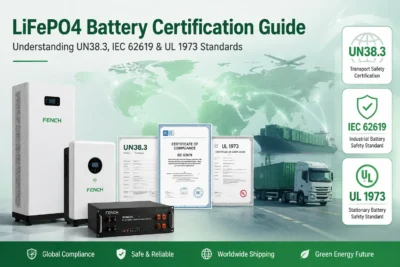
LiFePO4 Battery Certification Guide: UN38.3, IEC 62619 & UL 1973 Explained
When sourcing LiFePO4 batteries for solar energy storage, backup power systems, or OEM projects, certification is one of the most
LiFePO4 Battery Cell vs Finished Battery Pack: What Buyers Should Know
When sourcing lithium iron phosphate products, one of the first decisions is whether to buy a LiFePO4 battery cell or a finished battery