The Complete Guide to LiFePO₄ Solar Battery Storage (2026)
As electricity prices continue to rise and power grids face increasing pressure, more homeowners and businesses are investing in solar battery storage systems to improve energy independence and reduce long-term electricity costs. Rather than relying solely on solar panels to generate electricity during daylight hours, battery storage allows users to capture excess solar energy and use it whenever it is needed—even after sunset or during unexpected power outages.
Among today’s available battery technologies, LiFePO₄ (Lithium Iron Phosphate) has become the preferred choice for residential and commercial energy storage. Its excellent safety, long cycle life, high charging efficiency, and low maintenance requirements make it well suited for applications where reliability and long-term value are essential.
However, choosing the right solar battery system involves more than simply comparing battery capacities or prices. Factors such as daily electricity consumption, inverter compatibility, installation environment, battery management technology, and future expansion plans all play an important role in determining system performance and return on investment.
At Fench Energy, we’ve worked with distributors, installers, and project developers across Europe, North America, Africa, and Asia to develop customized LiFePO₄ energy storage solutions for residential, commercial, and industrial applications. Through years of manufacturing and project experience, we’ve seen firsthand how different applications require different energy storage strategies.
In this guide, we’ll explain how solar battery storage works, why LiFePO₄ technology has become the industry standard, how to choose the right battery capacity, and what to consider before investing in a home or commercial energy storage system.
What Is Solar Battery Storage?
Key Takeaway
A solar battery storage system stores excess electricity generated by solar panels, allowing homeowners and businesses to use clean energy at night, during cloudy weather, or whenever the utility grid is unavailable.
A solar battery storage system stores surplus electricity produced by solar panels so it can be used later instead of being sent back to the utility grid. This enables homeowners and businesses to maximize the value of their solar investment by increasing self-consumption and reducing dependence on traditional electricity suppliers.
Without battery storage, a standard solar photovoltaic (PV) system generates electricity only while the sun is shining. During the day, solar energy powers household appliances and electrical equipment. Any unused electricity is typically exported to the grid if local regulations allow. Once the sun sets, however, the property must draw electricity from the utility network.
Adding a Home Energy Storage System (Home ESS) changes this process. During daylight hours, excess electricity generated by the solar panels is automatically stored in a LiFePO₄ battery. In the evening, on cloudy days, or during periods of high electricity demand, the stored energy is discharged to power the home or business. This not only reduces electricity bills but also improves energy independence and provides greater protection against rising utility prices.
A typical residential energy storage system includes four key components:
- Solar Panels – Convert sunlight into electricity.
- Hybrid Inverter – Manages the flow of electricity between the solar panels, battery, home, and utility grid.
- LiFePO₄ Battery Storage System – Safely stores excess electricity for later use.
- Battery Management System (BMS) – Continuously monitors battery voltage, current, temperature, and cell balance to ensure safe and efficient operation.
One of the greatest advantages of battery storage is its backup capability. When paired with a compatible hybrid inverter, the system can automatically switch to battery power during a grid outage. Essential appliances such as refrigerators, lighting, internet routers, security systems, and communication equipment can continue operating until utility power is restored.
As renewable energy adoption continues to grow worldwide, battery storage has evolved from an optional upgrade into a key component of modern energy management. By increasing solar self-consumption, improving energy security, and reducing long-term electricity costs, solar battery storage offers both economic and environmental benefits for residential and commercial users alike.
Expert Tip
Choose a battery capacity based on your daily electricity consumption, not simply on the size of your solar panel system. A properly matched system delivers better performance and a higher long-term return on investment.
Why LiFePO₄ Batteries Are Becoming the Industry Standard
Key Takeaway
LiFePO₄ batteries have become the preferred choice for modern solar energy storage because they combine outstanding safety, long service life, high efficiency, and low maintenance—delivering better long-term value than many traditional battery technologies.
As the global transition to renewable energy accelerates, choosing the right battery chemistry has become just as important as selecting high-quality solar panels. While several lithium-ion battery technologies are available, LiFePO₄ (Lithium Iron Phosphate) has emerged as the industry standard for residential and commercial energy storage due to its excellent balance of performance, reliability, and safety.
Superior Safety
Safety remains one of the most important considerations for any energy storage system. Compared with some lithium-ion chemistries, LiFePO₄ batteries offer exceptional thermal and chemical stability, making them significantly less susceptible to overheating or thermal runaway. This makes them particularly suitable for residential installations where batteries are commonly installed indoors, such as garages, utility rooms, or dedicated equipment spaces.
Long Cycle Life
A high-quality LiFePO₄ battery can typically achieve over 8,000 charge and discharge cycles under normal operating conditions. For most households, this represents more than ten years of reliable daily use. A longer lifespan also reduces replacement frequency, lowering the total cost of ownership over the lifetime of the system.
High Energy Efficiency
LiFePO₄ batteries generally provide round-trip efficiencies of approximately 95%, allowing users to recover and utilize most of the electricity generated by their solar panels. Higher efficiency means less energy is lost during charging and discharging, helping maximize solar self-consumption while reducing reliance on grid electricity.
Low Maintenance
Unlike traditional lead-acid batteries, LiFePO₄ technology requires virtually no routine maintenance. There is no need to add water, perform equalization charging, or carry out regular corrosion inspections. Modern Battery Management Systems (BMS) automatically monitor charging, temperature, voltage, and cell balancing to maintain safe operation with minimal user intervention.
A More Sustainable Solution
Long-lasting batteries contribute to a more sustainable energy future. Because LiFePO₄ batteries require fewer replacements throughout their lifetime, they generate less material waste and reduce the overall environmental impact of energy storage systems. When combined with solar energy, they help homeowners and businesses lower carbon emissions while improving energy resilience.
Manufacturing Insight
From a manufacturer’s perspective, safety and long-term stability are often more important than achieving the highest energy density, especially for residential installations. This philosophy is one of the reasons why Fench Energy focuses on LiFePO₄ technology for its energy storage solutions. Rather than pursuing the highest energy density, our engineering team prioritizes battery safety, consistent performance, and long-term reliability—qualities that matter most to installers, distributors, and end users alike.
Expert Tip
When comparing batteries, don’t focus only on the purchase price. Consider cycle life, efficiency, warranty, safety, and maintenance costs, as these factors have a much greater impact on the total lifetime value of an energy storage system.
How to Choose the Right Battery Capacity
Key Takeaway
The ideal battery size depends on your daily electricity consumption, backup requirements, inverter compatibility, and future expansion plans—not simply the size of your solar panel system.
Choosing the right battery capacity is one of the most important decisions when planning a solar energy storage system. A battery that is too small may not provide enough backup power during the evening or a power outage, while an oversized system can increase installation costs without delivering additional value.
As a general guideline:
Battery Capacity | Typical Application |
5 kWh | Apartments, holiday homes, or households with low electricity consumption |
10 kWh | Average family homes with a standard rooftop solar system |
15 kWh | Larger households using heat pumps, air conditioners, or EV charging |
20 kWh+ | Villas or homes seeking extended backup power and greater energy independence |
100–256 kWh+ | Commercial buildings, factories, agricultural facilities, and industrial ESS projects |
Battery capacity should always be matched with the overall energy system. A compatible inverter, an appropriately sized solar PV array, and an intelligent Battery Management System (BMS) all contribute to better performance and longer battery life.
Another important consideration is future expansion. Many homeowners install additional solar panels, purchase electric vehicles, or increase household electricity consumption over time. Selecting a modular battery system that allows future expansion can reduce upgrade costs and extend the lifespan of the overall investment.
At Fench Energy, we’ve found that no two projects are exactly alike. Residential users may require compact storage systems ranging from 1 kWh to 20 kWh, while commercial and industrial applications often require scalable solutions from 100 kWh to over 256 kWh. For this reason, we support flexible OEM and ODM battery configurations that can be tailored to different markets and application scenarios.
Ultimately, choosing the correct battery size depends on daily consumption, inverter compatibility, backup requirements, and future expansion plans. Taking the time to evaluate these factors will help ensure reliable system performance and maximize your return on investment.
Common Mistake
Many homeowners purchase the largest battery they can afford. In reality, a properly sized system often delivers better efficiency and a faster payback period than an oversized installation.
Off-grid vs Hybrid Solar Systems
Key Takeaway
The best solar system depends on your location, access to the utility grid, and energy goals.
Solar energy systems generally fall into three categories:
Grid-tied System
A grid-tied system is connected directly to the utility network and does not normally include battery storage. It is suitable for areas with stable electricity supply and favorable net-metering policies.
Hybrid Solar System
A hybrid system combines solar panels, battery storage, and the utility grid. During the day, excess solar energy is stored in the battery. At night or during power outages, the battery supplies electricity to the home. Hybrid systems provide the best balance between energy independence and cost efficiency.
Off-grid Solar System
An off-grid system operates entirely independently of the utility grid. It relies on solar panels and battery storage to provide electricity at all times, making it ideal for remote locations where grid access is unavailable or unreliable.
Expert Tip
If you already have access to a reliable utility grid, a hybrid solar system is often the most practical and cost-effective solution for improving energy independence.
Battery Lifespan and Maintenance
Key Takeaway
A LiFePO₄ battery can provide more than 6,000 cycles of reliable service, but its actual lifespan depends on temperature, charging conditions, system design, and battery management.
One of the biggest advantages of LiFePO₄ batteries is their exceptional durability. Under normal operating conditions, a high-quality battery can provide reliable performance for more than a decade. However, maximizing battery lifespan requires attention to several key factors.
Temperature plays an important role in battery health. Excessive heat accelerates battery aging, while extremely low temperatures may reduce charging efficiency. Installing batteries in a well-ventilated location within the recommended operating temperature range helps maintain long-term performance.
Depth of Discharge (DOD) also influences battery longevity. Although LiFePO₄ batteries can safely operate at high DOD levels, avoiding frequent full discharges can further extend service life.
Perhaps the most important component is the Battery Management System (BMS). A high-quality BMS continuously monitors voltage, current, temperature, and cell balancing while protecting against overcharging, over-discharging, and short circuits. From a manufacturer’s perspective, the BMS is just as critical as the battery cells themselves because it directly affects safety, efficiency, and long-term reliability.
Proper charging practices, compatible inverters, and a correctly designed energy storage system also contribute to longer battery life and more stable performance.
At Fench Energy, every battery pack undergoes ATE (Automatic Test Equipment) testing before shipment to verify electrical performance, communication functions, and overall operational stability. This comprehensive quality control process helps ensure reliable operation in real-world applications and provides greater confidence for distributors, installers, and end users.
With intelligent battery management and proper installation, a LiFePO₄ battery can deliver safe, efficient, and dependable energy storage for many years.
What Certifications Should You Look For?
Key Takeaway
International certifications help verify that a battery has been tested for safety, transportation, and regulatory compliance. They are an important indicator of product quality and reliability, especially for international projects.
When investing in a solar battery storage system, performance is only part of the decision. Certifications demonstrate that a battery has been independently evaluated to meet recognized international standards for safety, transportation, and product quality. For distributors, installers, and project developers, choosing certified products can also simplify customs clearance and local regulatory compliance.
Some of the most important certifications include:
Certification | Purpose |
CE | Demonstrates compliance with European safety, health, and environmental requirements. |
MSDS | Provides information on battery materials, handling, storage, and transportation safety. |
UN38.3 | Confirms the battery has passed transportation safety tests required for shipping lithium batteries by air, sea, and land. |
IEC | Indicates compliance with internationally recognized electrical safety and performance standards for energy storage products. |
While certifications alone cannot guarantee product quality, they provide confidence that a battery has undergone standardized testing before entering the market.
At Fench Energy, our LiFePO₄ energy storage products comply with internationally recognized certifications including CE, MSDS, UN38.3, and IEC. Combined with comprehensive in-house testing and strict quality control procedures, these certifications help ensure reliable performance across residential, commercial, and industrial energy storage applications.
Frequently Asked Questions (FAQ)
1. Can solar batteries work without sunlight?
Yes. Solar batteries store electricity generated during the day, allowing you to use that energy at night or during cloudy weather. However, once the stored energy is depleted, the battery must be recharged by solar panels or another power source.
2. How long does a LiFePO₄ battery last?
A high-quality LiFePO₄ battery typically delivers more than 6,000 charge cycles, which can translate into 10–15 years of normal residential use, depending on operating conditions and maintenance.
3. Can I add more batteries later?
In many cases, yes. Many modern battery systems are modular and support future expansion. Before adding batteries, make sure the inverter and Battery Management System (BMS) are compatible with additional battery modules.
4. Do solar batteries work in winter?
Yes. LiFePO₄ batteries can operate in cold environments, although charging efficiency may decrease at very low temperatures. Many systems include temperature protection to ensure safe operation.
5. Can one battery power an entire house?
It depends on the battery capacity and your household’s electricity consumption. A properly sized system can power essential appliances during outages, while larger battery systems may support the entire home for extended periods.
6. Is LiFePO₄ technology safe?
Yes. LiFePO₄ is widely regarded as one of the safest lithium battery chemistries due to its excellent thermal stability and resistance to thermal runaway.
7. How many batteries do I need?
The required number depends on your daily electricity consumption, desired backup time, and solar generation capacity. A professional energy assessment is recommended before selecting a system.
8. What warranty should I expect?
Most high-quality residential LiFePO₄ batteries offer warranties ranging from 5 to 10 years, depending on the manufacturer and product specifications.
9. Can I use any inverter with a LiFePO₄ battery?
Not always. The inverter should be compatible with the battery’s communication protocol, voltage range, and Battery Management System (BMS). Checking compatibility before installation helps ensure reliable operation.
10. Is LiFePO₄ better than lead-acid batteries?
For most solar energy storage applications, yes. LiFePO₄ batteries offer longer lifespan, higher efficiency, lower maintenance, and better overall value despite a higher initial investment.
Why More Global Partners Choose Fench Energy
Reliable energy storage is built on more than battery specifications. It requires manufacturing expertise, consistent quality control, flexible engineering capabilities, and dependable customer support throughout the entire project lifecycle.
Manufacturing Expertise
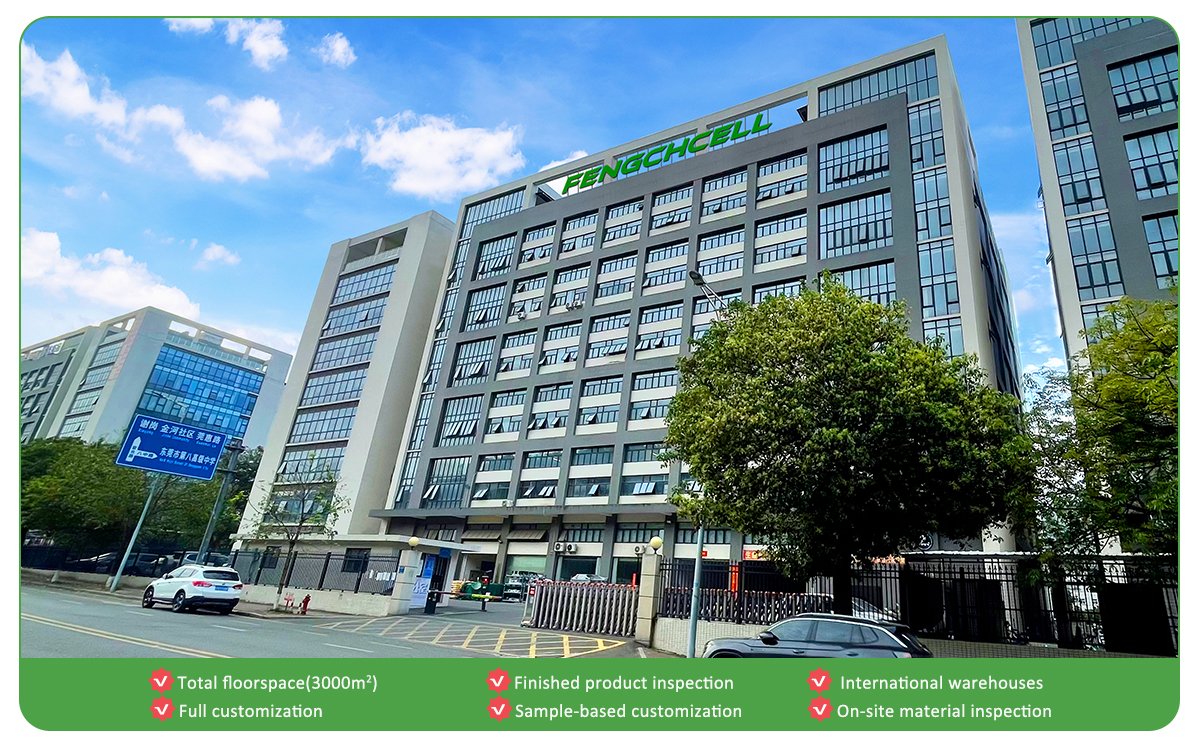
Fench Energy specializes in the research, development, and manufacturing of LiFePO₄ energy storage batteries. Our production facility spans more than 7000 m² and features automated battery pack assembly lines, advanced testing equipment, and a dedicated quality inspection laboratory. These capabilities enable us to maintain consistent product quality while supporting stable production for customers worldwide.
Quality Assurance
Every battery pack undergoes comprehensive testing before shipment to verify electrical performance, communication functions, and overall system reliability. Our products comply with internationally recognized certifications including CE, MSDS, UN38.3, and IEC, and are backed by a 5-year product warranty, providing greater confidence for distributors, installers, and end users.
Flexible OEM & ODM Services
Every market has unique requirements. To support different applications, Fench Energy offers customized OEM and ODM solutions, covering 3.2V, 12V, 24V, 48V, 51.2V LiFePO₄ batteries, as well as high-voltage energy storage systems for residential, commercial, and industrial projects.
Global Delivery & Technical Support
To better serve international customers, Fench Energy supports global distribution through warehouse resources in Europe and the United States, helping reduce delivery times and improve supply chain efficiency. Our technical support team also provides 24-hour response service, assisting customers with product selection, technical documentation, and after-sales support.
Rather than offering a one-size-fits-all solution, Fench Energy works closely with distributors, installers, and project developers to deliver reliable energy storage systems tailored to different applications and markets.
Conclusion
As the demand for renewable energy continues to grow, LiFePO₄ battery storage has become one of the most reliable and future-ready solutions for residential and commercial energy systems. Compared with traditional battery technologies, LiFePO₄ offers superior safety, longer service life, higher efficiency, and lower maintenance costs, making it an excellent long-term investment for homeowners, businesses, and energy project developers.
Choosing the right energy storage solution, however, involves more than selecting a battery with the highest capacity. Daily electricity consumption, inverter compatibility, installation environment, battery management, and future expansion should all be carefully considered to ensure reliable performance and the best return on investment.
Whether you’re designing a new solar energy system, upgrading an existing installation, or sourcing a trusted manufacturing partner for OEM or ODM projects, taking the time to select the right battery solution today will deliver lasting value for years to come.
At Fench Energy, we combine manufacturing expertise with flexible engineering capabilities to support a wide range of residential, commercial, and industrial energy storage projects. Our goal is to help customers build safer, more efficient, and more reliable energy storage systems tailored to their specific applications.
Need help choosing the right energy storage solution? Contact the Fench Energy team for expert advice and customized OEM/ODM support. We’d be happy to discuss your project and recommend a solution that fits your requirements.
About the Author
Fench Energy Engineering Team
The Fench Energy Engineering Team specializes in the research, development, and manufacturing of LiFePO₄ energy storage batteries for residential application. With experience supporting OEM and ODM projects across Europe, North America, Africa, and Asia, the team regularly shares practical insights into battery technology, solar energy storage systems, and industry best practices to help customers make informed decisions.